Lessons
Golf lessons on a simulator
Indoor lessons pair a coach's eye with launch monitor numbers and video. Here's what a session looks like and how to pick the right instructor.
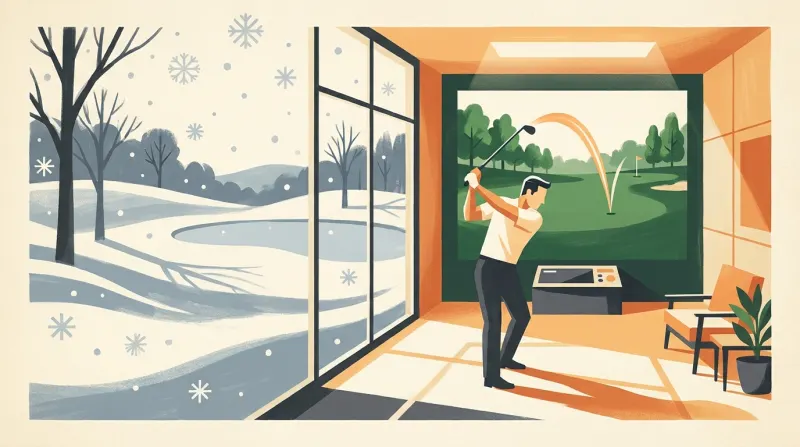
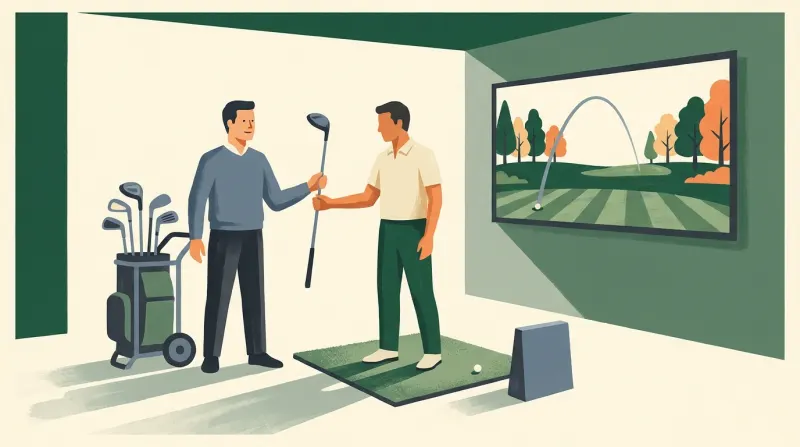
A lot of golf instruction has moved indoors. Many teaching pros now work out of simulator bays, where every shot is measured, every swing can be filmed, and the weather never cancels the lesson. If you've only ever taken lessons on a range, or never taken one at all, here's what to expect, where indoor lessons shine, where they fall short, and how to choose an instructor.
What happens in a simulator lesson
Every coach runs a lesson a little differently, but most follow a similar pattern:
- A short talk. Your goals, your usual miss, how often you play and practice, and any injuries. Good coaches ask more than they tell at this point.
- Warm-up and baseline. You hit shots while the coach watches and the launch monitor records them. Many coaches film your swing from the side and from the front.
- One or two changes. The coach picks the change that will help most, explains it, and gives you a drill or a feel to try.
- Practice with feedback. You hit more shots, and the coach uses the numbers and the video to show whether the change is working.
- A recap. What you worked on and what to practice next. Some coaches send notes, video or data afterward through an app or email.
What the launch monitor and video add
Outdoors, a coach judges a shot by watching it fly. Indoors, the launch monitor turns each shot into numbers right away. That helps in a few ways:
- It explains your miss. Club path and face angle show why the ball curves. Attack angle and strike numbers show why it comes off thin or heavy.
- It shows small changes. A change that feels huge may move the numbers only a little, and a small feel can make a big difference. Data helps you and your coach see what's really happening.
- It tracks progress. Comparing numbers from lesson to lesson shows whether a change is sticking.
- Video shows your body. Numbers describe the club and ball; slow-motion video shows what your body did to produce them.
The best coaches use data as a tool, not a script. Expect them to turn numbers into simple feels and drills, rather than burying you in charts. For more on what those numbers mean, see golf simulator technology, explained.
The upsides
- No weather problems. Lessons go ahead in rain, snow, heat and darkness.
- Privacy. A bay is enclosed. If you feel self-conscious on a busy range, this helps a lot, especially for beginners.
- Consistent conditions. No wind or uneven lies, so it's easier to see what your swing alone is doing.
- Instant, exact feedback. Every shot is measured, so you don't have to guess.
- Easy practice in between. If the venue rents bays, you can practice your drills with the same numbers in front of you.
The downsides
- You don't see real ball flight. The screen shows a modeled flight. Most of the time that's close, but it isn't the same as watching the ball land.
- Mats forgive mistakes. Slightly heavy strikes can look fine off a mat. A good coach watches for this; you should too.
- Short game and putting are harder to teach indoors. Chips off a mat and putts on a screen don't behave like the real thing. Some venues have putting greens, and some coaches move short-game lessons outside in the season.
- No course management. Flat lies and perfect conditions don't teach you how to play from a slope, a bunker or the wind.
- Data overload. Too many numbers can distract you from the one thing that matters.
For most golfers, the best mix is indoor lessons for the full swing, plus some practice or a playing lesson outdoors when the season allows.
Types of lessons you'll find
- Private lessons: one-on-one with a coach.
- Lesson packages or series: several lessons booked together, often with a plan across them.
- Group clinics: a coach with a small group, often themed, like driving or wedges. Good for beginners and for keeping costs down.
- Junior programs: lessons and clinics for kids and teens.
- Simulator playing lessons: playing holes on the simulator with a coach, working on shot choice and routine.
- Coaching memberships: ongoing coaching with regular check-ins, sometimes bundled with practice time.
What each venue offers, and what it costs, varies widely. Check the venue's website for current options and rates.
Questions to ask an instructor
A short conversation before you book tells you a lot. Ask:
- What's your teaching background? Many coaches belong to a professional golf association or have trained with a teaching program. Ask how long they've taught and who they usually work with.
- Do you teach players like me? Beginners, juniors, seniors, women, low handicappers: coaches often have a sweet spot.
- How do you use the launch monitor and video? Listen for a clear, simple answer.
- What will I get after each lesson? Notes, video, drills, data?
- How many lessons do you suggest, and how far apart? A good coach will talk about practice between lessons, not just more lessons.
- Can I practice here between lessons? Bay rentals or practice memberships make drills much easier.
- Do you teach short game and putting, and where?
- What's the cancellation policy, and how do packages work?
Getting the most from a lesson
- Arrive a little early and warmed up.
- Bring your own clubs, so the changes carry over to your real set.
- Go in with one clear goal.
- Write down the main point and the drill right after.
- Practice the drill before the next lesson, even briefly. Most of the improvement happens between lessons.
Questions
- Are simulator lessons as good as outdoor lessons?
- For the full swing, often yes, and sometimes better, thanks to instant data and video. For short game, putting and course play, outdoor time still helps.
- Can a complete beginner take a simulator lesson?
- Yes. The privacy of a bay suits beginners well. Tell the coach you're new, and ask whether the venue can lend you clubs.
- How many lessons will I need?
- It depends on your goal and how much you practice. Ask the coach for a plan after the first lesson.
- Do I need my own clubs?
- It helps, but it isn't required at many venues. Bring them if you have them, so what you learn carries over.
Find a lesson near you
- Indoor golf venues with lessons, by state and city, with the review quote or website line that shows each one teaches.
- Venues with club fitting, often run by the same pros.
- Trackman venues and Foresight venues, as named on each venue's own website.